
Custom Business Operating Systems
Your Business Evolved.
Your Operating System Should Too.
Craft House Systems finds the operational gaps businesses have learned to live with, then designs and builds a custom operating system around the way the company actually works.
Custom systems for businesses, agencies, and enterprise organizations.
2026 Check
Your Company May Be Current.
Is the System Behind It?
Successful companies evolve. Customers change, teams change, processes change, and expectations rise with them. The systems underneath the business usually evolve more slowly, one tool and one workaround at a time.
A successful company can outgrow its infrastructure long before anyone calls it broken.

The most expensive problems in your business may be the ones everyone stopped noticing.
Small gaps become normal. Normal becomes expensive.
Revenue Leakage
The Biggest Leaks in a Business Rarely Look Big.
Companies rarely lose money through one dramatic failure. They lose it in small amounts, repeatedly, through gaps everyone has learned to work around.
- 01
Someone showed interest. Nothing happened next.
The inquiry arrived, got acknowledged, and then quietly stopped moving.
- 02
A customer disappeared because nobody owned the next step.
Nothing failed loudly. The relationship simply ran out of momentum where no report was watching.
- 03
Your best people keep answering questions the system should already know.
Senior staff spend the day re-explaining what the company knows but never put anywhere findable.
- 04
Leadership cannot see something without asking someone.
Status becomes a conversation instead of a view, and decisions wait on a person assembling the answer.
- 05
A critical process still depends on somebody remembering.
It works until that person is out, busy, or gone. Then the cost shows up somewhere else, usually with a customer.
Small operational gaps compound.
Your next revenue problem may already be sitting inside a process everyone thinks is normal.

Our Approach
We Learn the Business Before We Build the System.
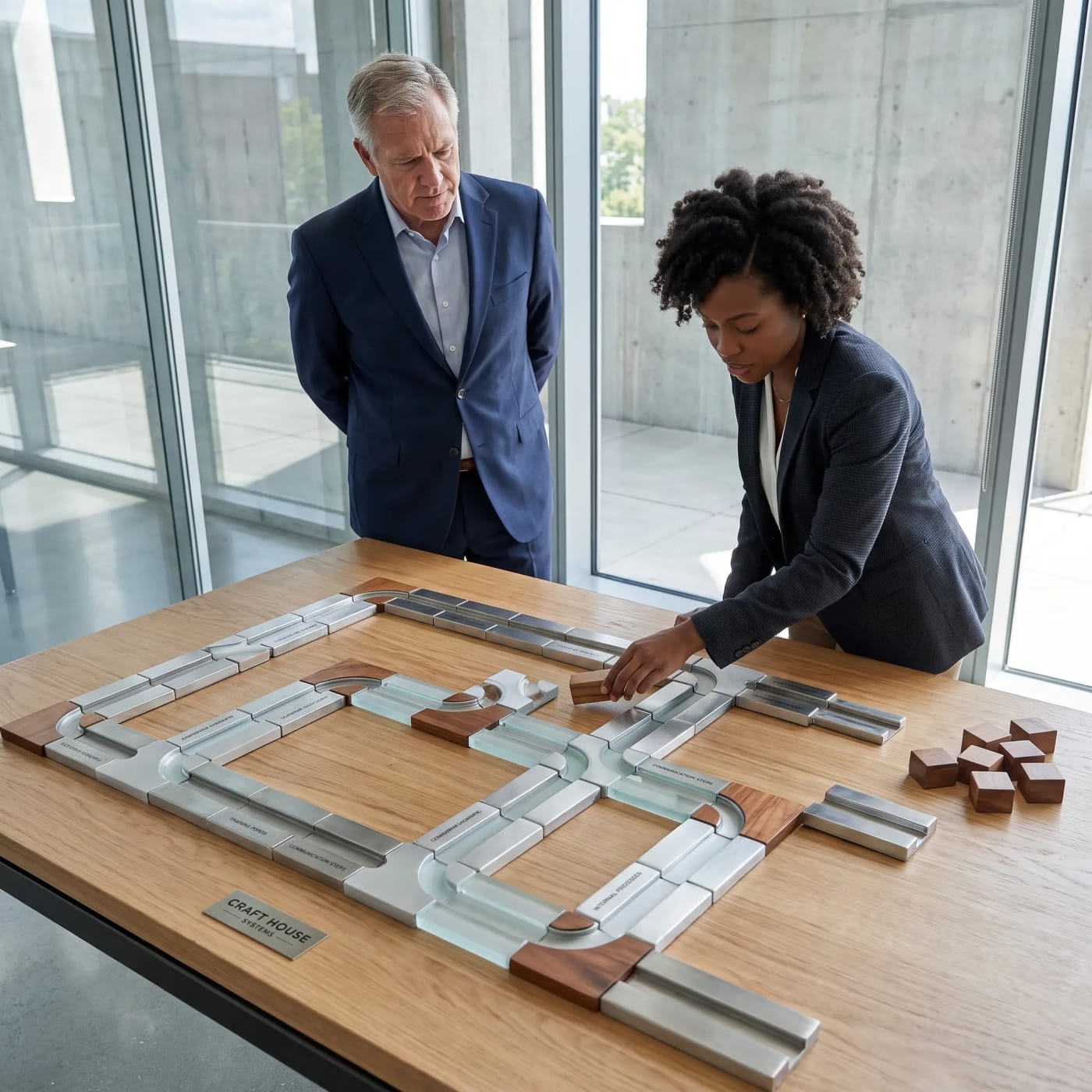
Nothing gets designed until we understand how the company runs on a normal Tuesday.
- What you use, and what works well enough to keep
- What frustrates the people doing the work every day
- Where information stops instead of moving forward
- Where the work slows down or gets repeated
- What has become normal that should not be
The goal is not to replace everything. It is to understand what deserves to stay, what needs to change, and what the business has learned to tolerate.
Renovate or Rebuild
Keep What Works.
Fix What Is Holding You Back.
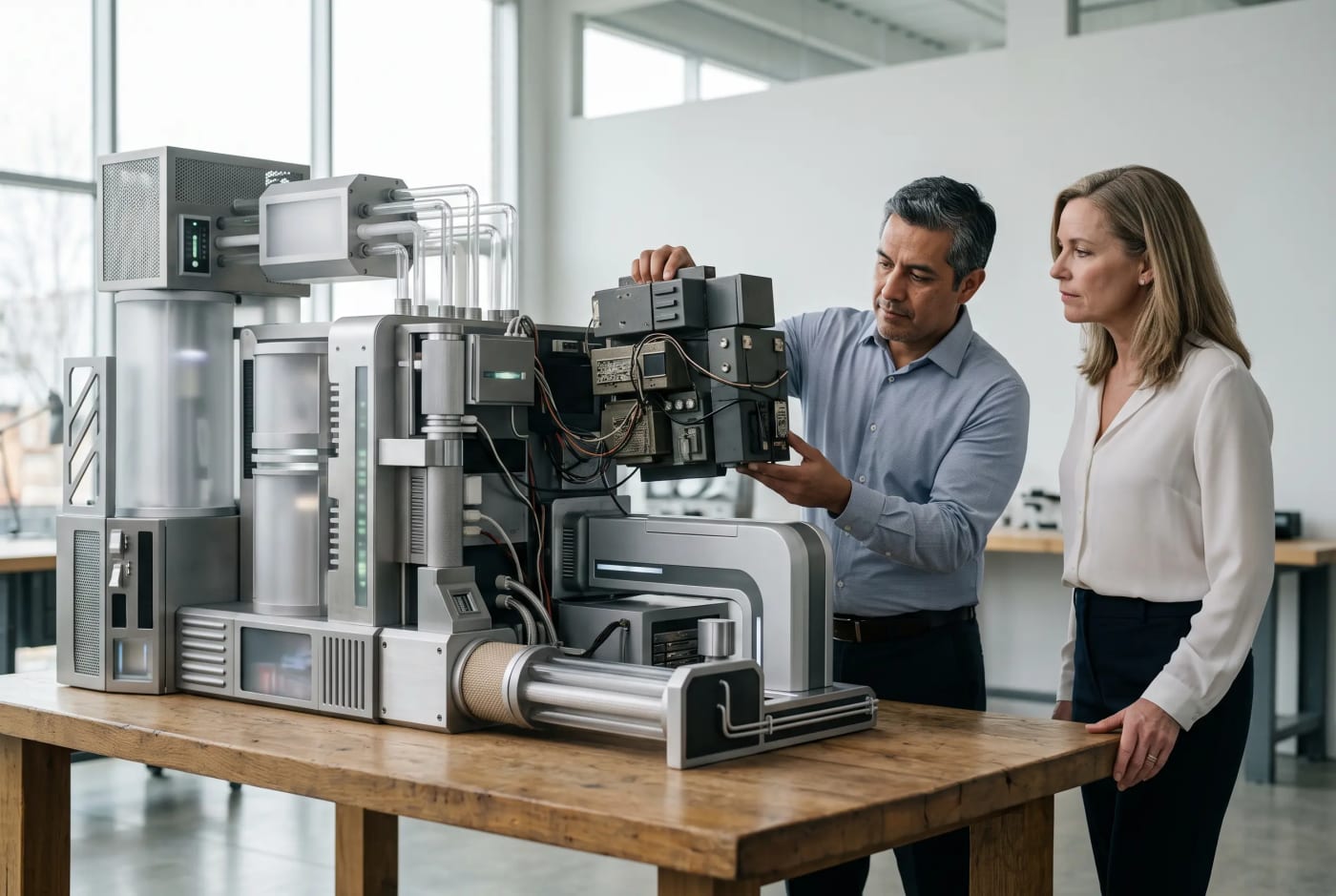
A total replacement is rarely the right answer. The decision comes out of what we find inside the business, not out of what is easiest to sell.
Renovate
Modernize the parts of the operation that no longer fit the company.
Rebuild
Create a new operating environment when the old one cannot carry where the business is going.
Connect
Make the parts of the company that should communicate actually communicate.
AI Inside the Business
Give Your Team Access to What Your Best People Already Know.
The system holds what your business approves: training, procedures, policies, products, services, and the internal answers your best people already give. Staff find them without interrupting a senior employee, and clients get accurate support with a clear next step.
Critical company knowledge should belong to the company, not disappear when the right person is unavailable.


After Hours
Your Office Can Close Without Your Business Going Silent.
Interest does not keep business hours. Approved answers, information capture, a useful first response, routing to the right place, and a clear next step. Human judgment stays with your people.

User Experience
Your People Should Not Have to Fight the System to Do Their Job.
A system people avoid using eventually becomes an operational problem.
Ease of use decides adoption, how quickly new staff get productive, how consistent the work stays, and how the job feels day to day. Staff see what is theirs. Managers see what is moving. Executives see the shape of the business, from anywhere.
Leadership
Build a Company That Doesn't Need You in Every Room.
When the operating system holds the process, leadership stops being the connective tissue between departments.
- See what matters without assembling it first
- Fewer things to chase and follow up on personally
- Less dependence on what one person remembers
- Fewer repeated explanations of the same process
- Cleaner accountability for who owns what
- Access to the business when you are away from the office

Real Work
Different Businesses.
Different Problems.
Different Systems.

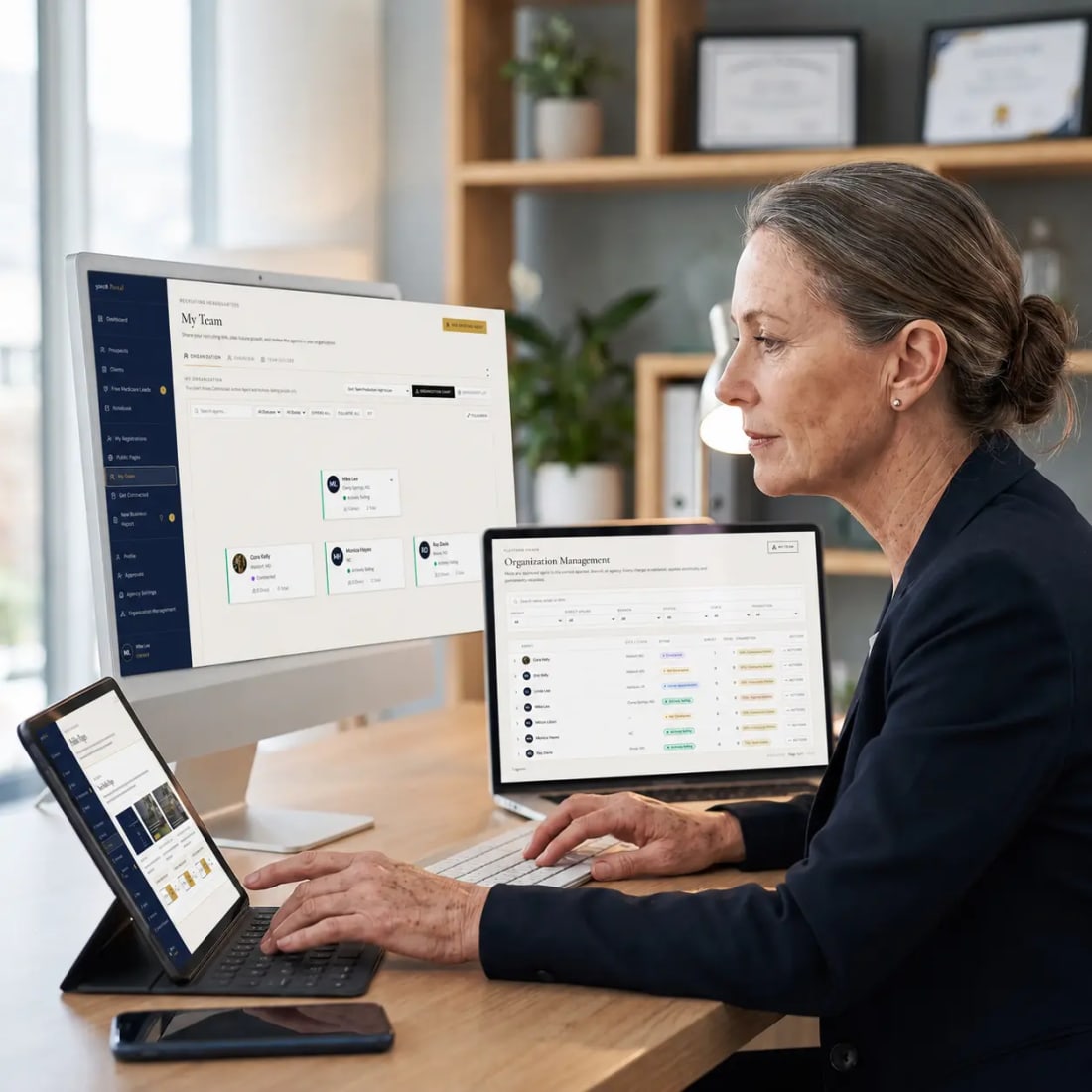
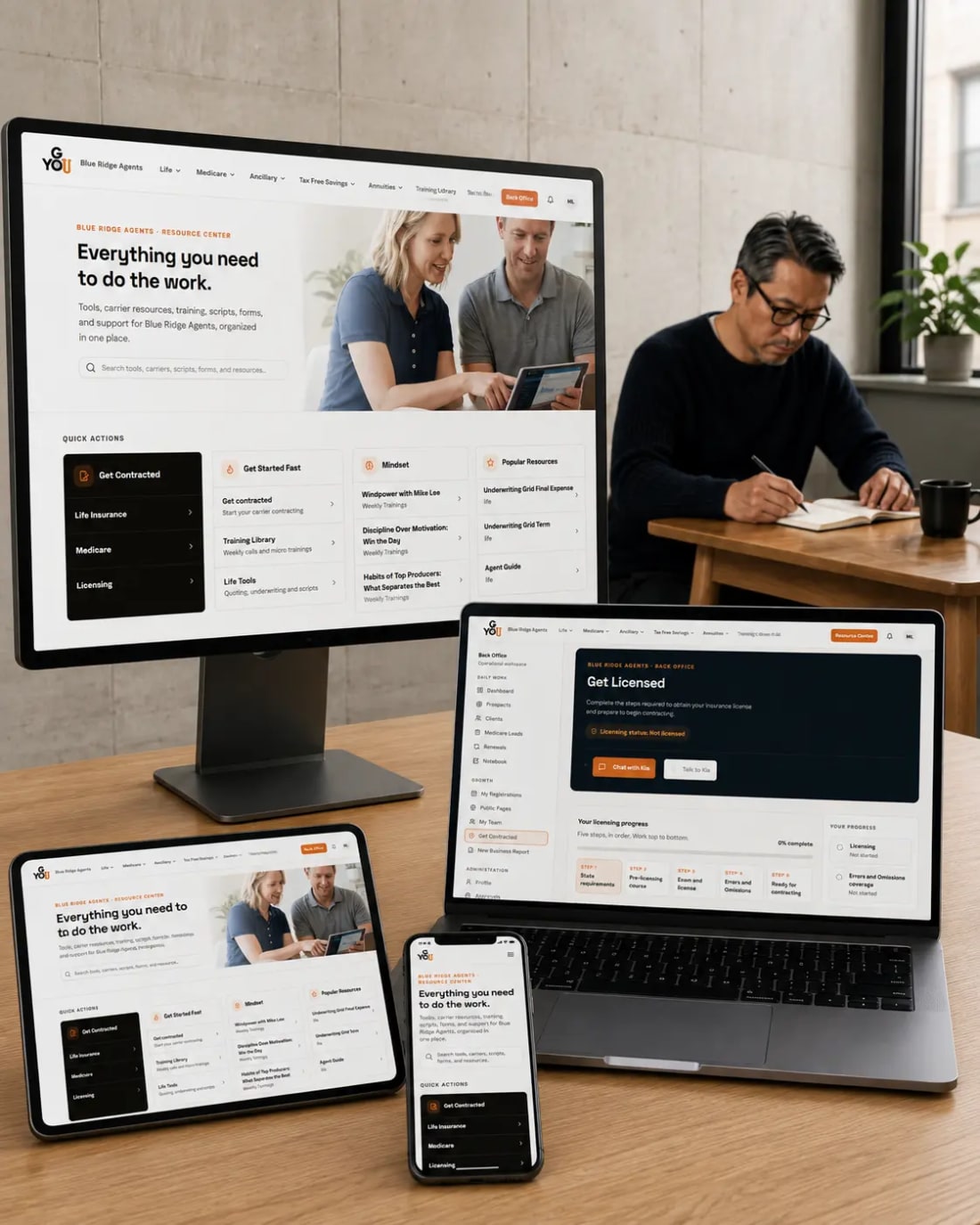

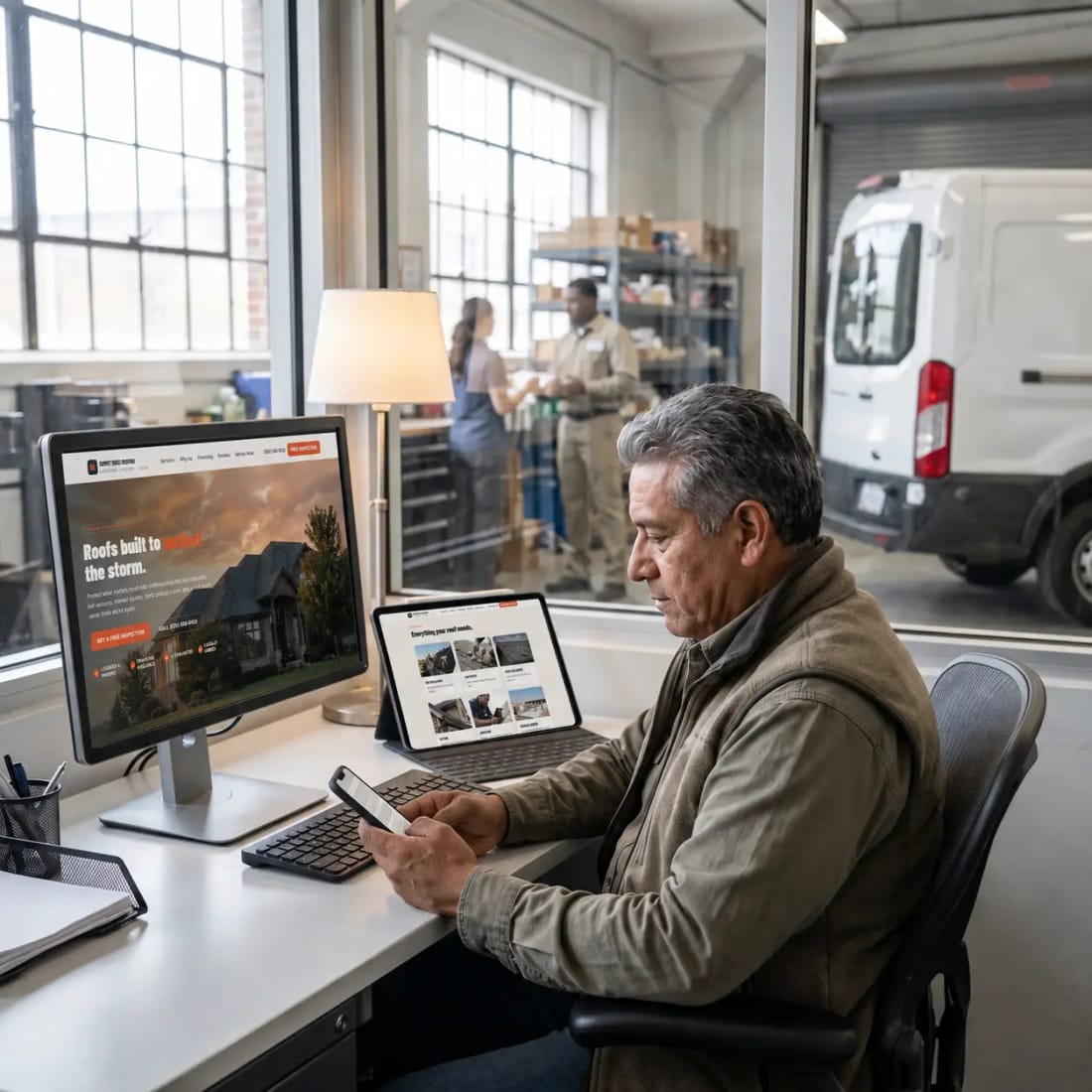
More systems, more contexts.
Every build starts from a different operation. See how the architecture changes with the business.
Scale
Built Around the Complexity of Your Business.
These are not packages. They describe how much architecture a company actually requires. Two organizations in the same industry rarely need the same system.
Focused Business
A single operating environment that replaces scattered tools and gives a small leadership group real control over the day.
Growing Organization
Roles, departments, and handoffs multiply. The architecture separates responsibility while keeping information connected.
Enterprise Complexity
Multiple business units, deeper permissioning, heavier integration requirements, and reporting that has to hold up under scrutiny.
Custom systems are scoped around the complexity of the business, the architecture required, and what needs to be built or connected.

Why Craft House Systems
Serious Thinking.
Custom Execution.
Senior-level thinking from discovery through deployment, with focused expertise built around the problem in front of us.
- We understand the operation before we design anything.
- We do not force a template onto a business that does not fit it.
- We care whether people actually use what we build.
- We keep what already works instead of replacing it for the sake of it.
- We connect the things that should have been communicating years ago.
- We use AI where it does real work, and leave it out where it does not.
System Audit
What Has Your Business Learned to Live With?
An audit answers four questions about your operation: what should stay, what should change, what should connect, and what should be built. It also shows where friction has become normal and where opportunity may be slipping away.
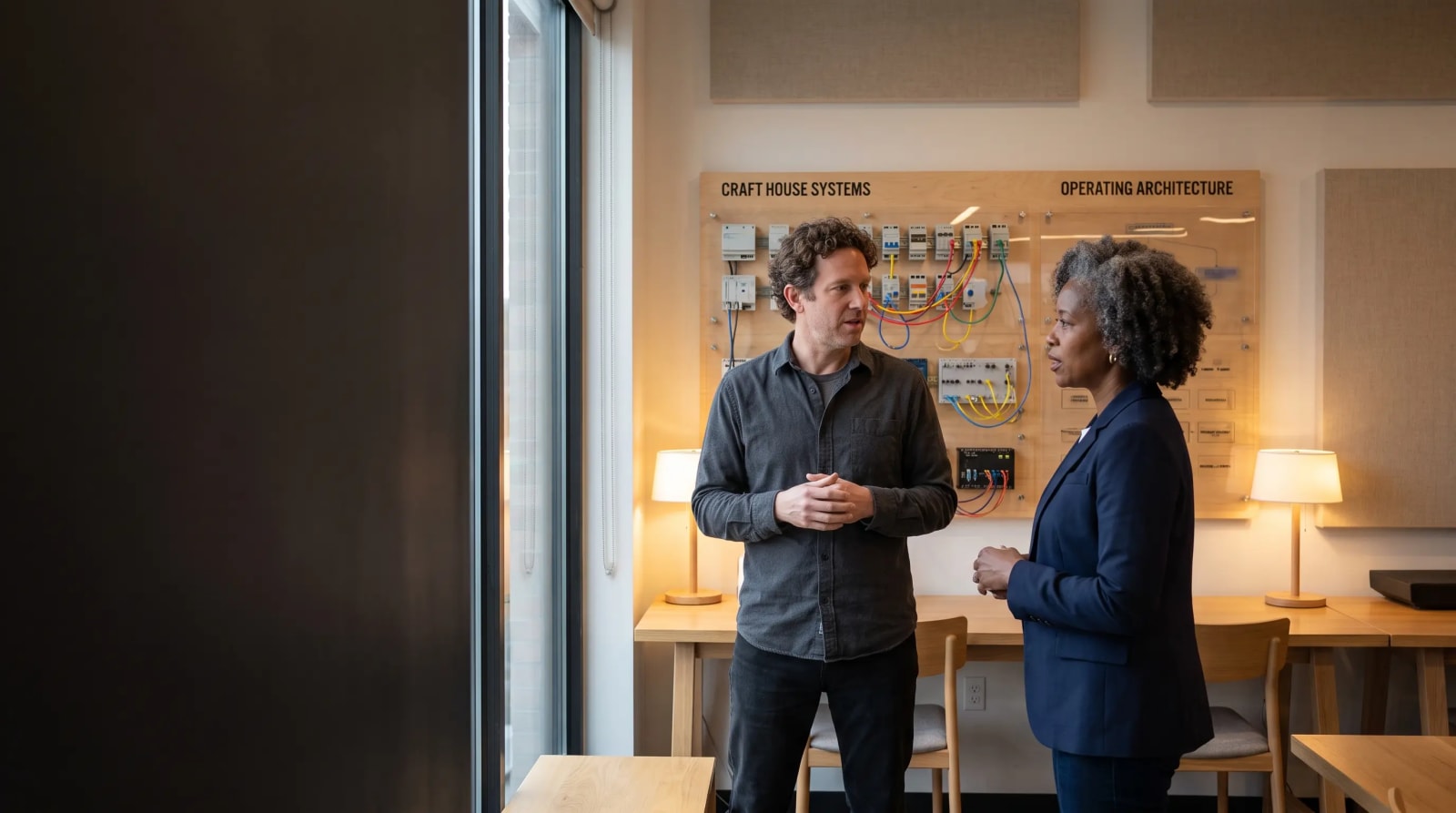
Build the Operating System Your Business Actually Needs.
Keep what works. Fix what doesn't. Connect what should communicate. Build what is missing.